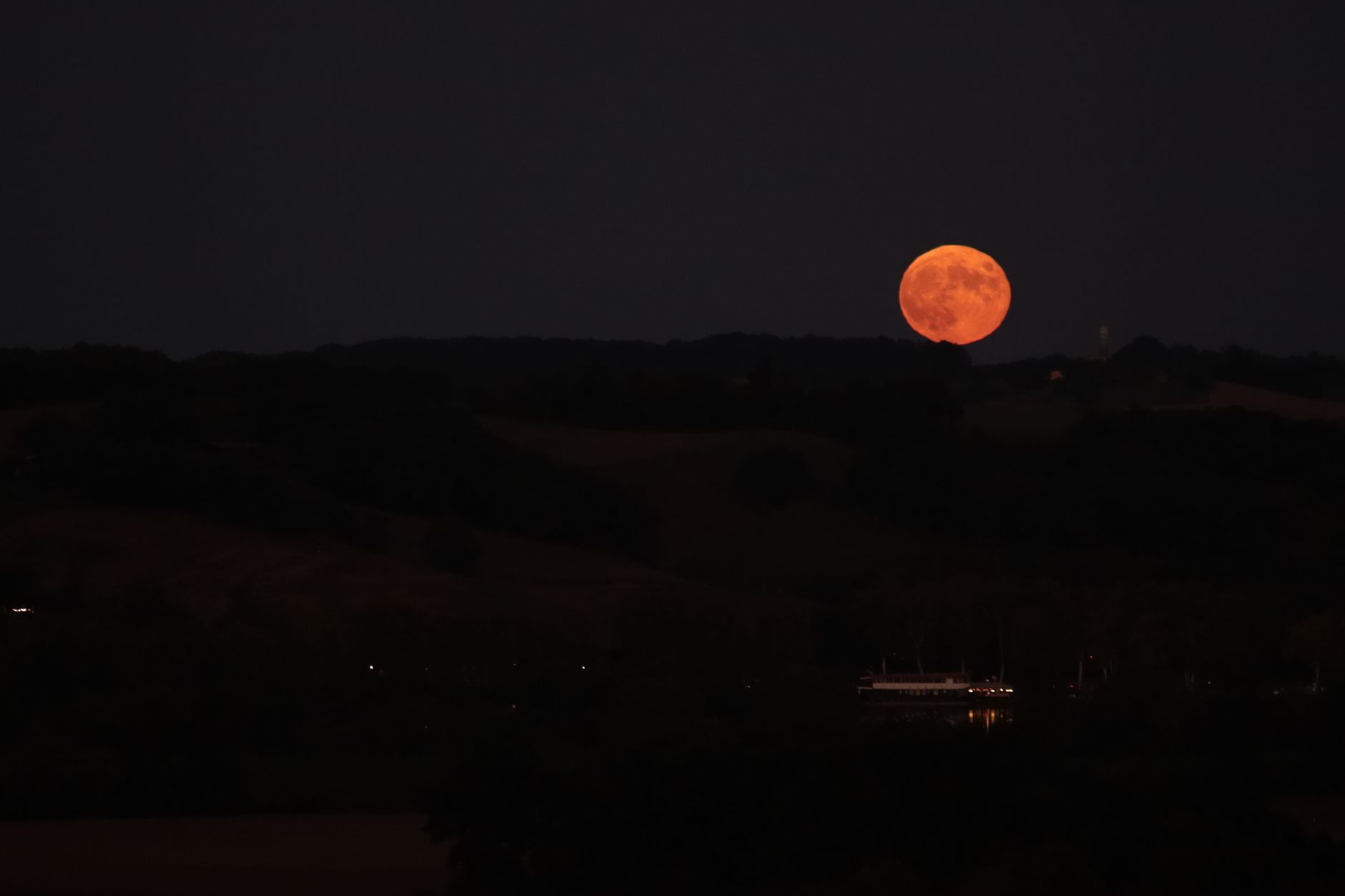
The lunar cycle is not a mystical decoration on spiritual practice. It is an operating clock that the classical traditions across continents independently identified as a real periodicity in the operative field, and that a disciplined practitioner uses to time work for the conditions that best support it. Used correctly, the cycle compounds results. Ignored, the cycle still operates on you whether you notice it or not. This is the practitioner's guide to what each of the eight phases is actually for, how to stack a lunar phase with a planetary day, and the common errors that make people give up on lunar timing prematurely.
The Short Answer
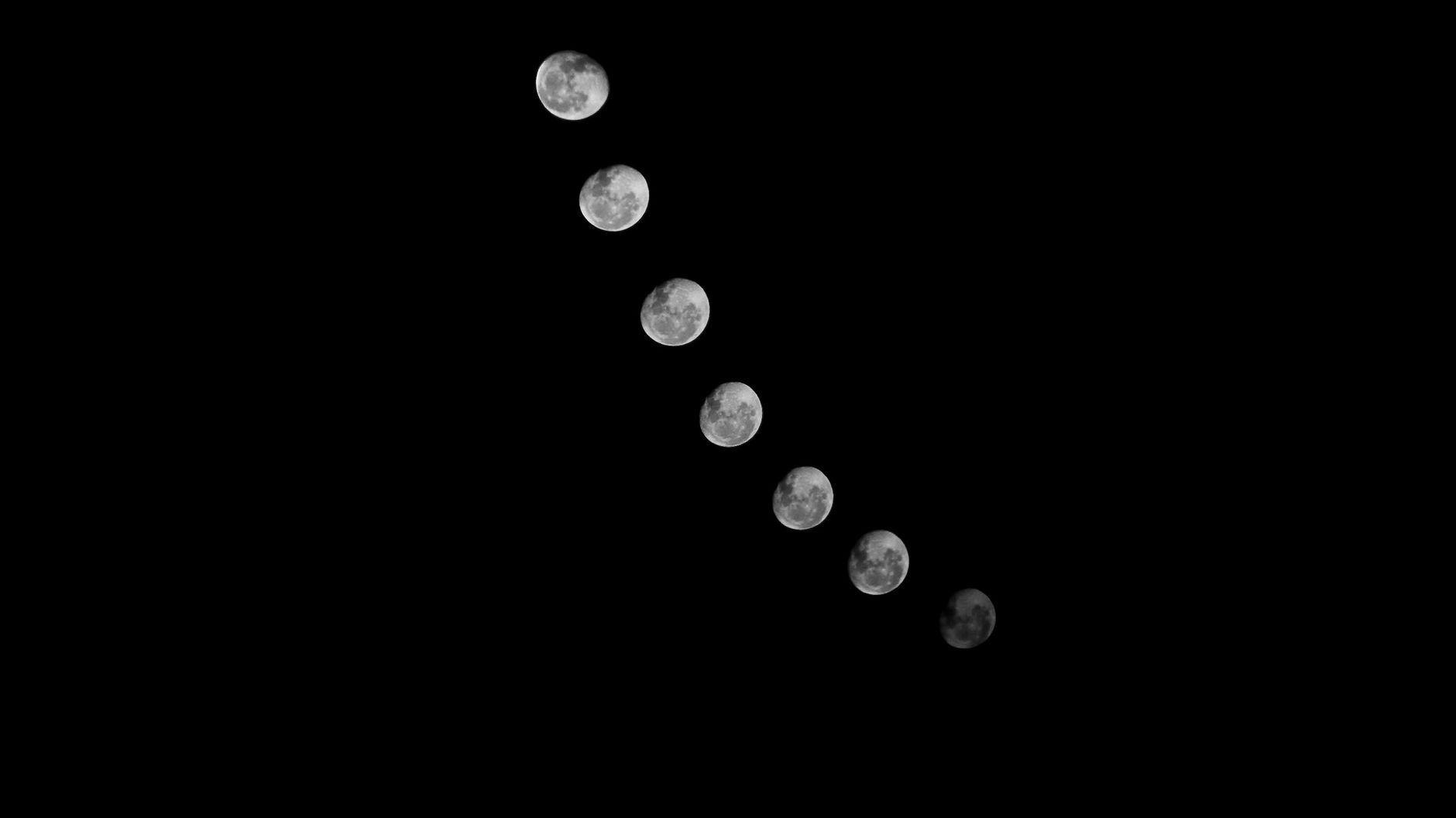
The lunar cycle has eight operative phases: new moon, waxing crescent, first quarter, waxing gibbous, full moon, waning gibbous, last quarter, and waning crescent. The waxing half (new through full) is the field-building half — appropriate for work that grows, attracts, increases, or initiates. The waning half (full through next new) is the field-clearing half — appropriate for work that releases, severs, banishes, or sheds. The two pivot points — full moon and new moon — are the operative peaks of each function. A practitioner uses the matching half of the cycle for the matching class of work. The system is structural; the result-difference between cycle-aligned and cycle-misaligned work is observable within a few full cycles of disciplined logging.
Why the Lunar Cycle Maps to Operative Work
Three independent classical traditions — the western esoteric corpus, the eastern Vedic and Tantric calendars, and the Islamic-esoteric letter-science tradition — all converged on a structured use of the lunar cycle, despite developing largely without contact with each other. Convergence across independent traditions is the kind of evidence that should make a practitioner take a phenomenon seriously, the way independent labs replicating a result makes a scientist take it seriously. The mechanism the traditions agree on is that the lunar cycle modulates the receptivity of the operative field — the same way it modulates tides, hormonal cycles in many species, and certain biological rhythms in plants. The field follows the cycle whether the practitioner is paying attention or not.
This is the wider Hermetic frame — the principle of Rhythm applied at the lunar scale. Rhythm says: everything that is alive moves in cycles between two poles, and the cycle is not optional. The lunar phase is one of the most visible and reliable of those rhythms, which is why it became one of the first calibration tools every major operative tradition adopted.
The Eight Phases and What Each Is For
Below is the working catalog. Each phase entry gives the operative quality, the type of work it best supports, and a brief note on common misuse.
- New Moon — the seed point. The field is most receptive to fresh intentions and the initiation of new operations. Use for setting intentions, starting practices, planting what you want to grow, beginning a new cycle of work. Common misuse: starting too much at once. The new moon rewards one clear intention, not seven scattered ones.
- Waxing Crescent — the first build. The intention set at the new moon now needs structural reinforcement. Use for taking the early concrete steps that anchor the intention in action, for the first round of disciplined practice in support of the new operation. Common misuse: expecting visible results this early. This phase is for groundwork, not harvest.
- First Quarter — the decisive build. The field is at half-strength and pushing toward fullness. Use for the work that requires effort and decision — the practice that has resistance, the conversation that has been avoided, the operative work whose success depends on willed sustained effort. Common misuse: hesitation. The first quarter does not reward sitting still.
- Waxing Gibbous — the refining build. The field is near maximum and the work shifts from action to refinement. Use for adjustment, for catching errors in the operation, for the last shaping before the peak. Common misuse: introducing new work in this phase — better to wait for the next new moon than start something fresh in the late waxing.
- Full Moon — the peak of the waxing function. The field is at maximum receptivity to manifestation, completion, recognition, and the visible expression of what was begun two weeks earlier. Use for working that needs visibility, for completing a phase of practice, for ritual work whose intention is fullness and abundance. The full moon is also the peak time for clear perception — divinatory and reflective work both benefit. Common misuse: treating the full moon as the time to start something. It is the time to bring something to its peak, not to begin.
- Waning Gibbous — the first release. The cycle has turned toward clearing. Use for honest assessment of what worked and what did not in the cycle just completed, for the first deliberate letting-go of what no longer serves. Common misuse: confusing waning with weakness. The waning half is not the weaker half; it is the half whose function is different.
- Last Quarter — the decisive release. The mirror of the first quarter on the clearing side. Use for the work that requires force to end — severing a tie that has been held too long, ending a commitment that has run its course, the operative work whose purpose is removal. This is the cleanest phase for protocols whose function is closure. The toxic-relationship protocol and cord-cutting work have the best supporting conditions in this window.
- Waning Crescent — the final clearing. The field is most receptive to the deep release of long-held material, to the dissolving of patterns that resisted clearing in earlier phases. Use for rest, for completing the clearing function of the cycle, and for preparing the ground for the next new moon. Common misuse: trying to start new things in this phase. The waning crescent rewards finishing, not beginning.
How a Practitioner Actually Uses the Cycle
The operative workflow is straightforward. Identify whether the planned work is a building or a clearing operation. Locate the current phase of the moon. If they match, proceed and the field supports the work. If they do not match, either wait for the appropriate half of the cycle or, if timing forces the issue, execute the work knowing that the field is not aligned with the operation and you will need to compensate with additional intensity, repetition, or correspondence stacking. The cycle is a force-multiplier when aligned and a friction when opposed.
The phase information is publicly available — any almanac or astronomy app gives you the date of the next new moon, full moon, and the intermediate phases. There is no need for esoteric phase-tracking software. The information is free; the discipline is using it.
The Solar-Lunar Stack
Where the lunar phase says what kind of operation the field supports, the planetary day says what specific class of operation the day supports. Stacking the two compounds the alignment. A clearing operation timed for the last quarter (lunar clearing peak) on a Tuesday (Mars — the planet of severance) is structurally supported on two axes; the same operation on a Friday during the waxing gibbous is fighting both clocks at once.
This is the principle of Correspondence applied across two scales. The lunar cycle is the larger scale; the planetary day is the smaller. Both can be combined with the planetary hour for a three-layer stack, but the cycle and day alone capture most of the available alignment for a practitioner who is not optimizing every variable. For the deeper application of the time-of-day variable, see planetary hours in practice.

Common Mistakes
Four errors recur in practitioners who try lunar timing and conclude that it does not work. First, only running the experiment for one cycle — the signal across a single 28-day window is too small to read clearly; the difference shows up across three to six cycles of disciplined logging. Second, mistaking the dramatic for the operative — the full moon is not the time to start everything; it is the peak of a specific function. Third, ignoring the void-of-course moon, the brief window each cycle when the moon is in transition and no work of any kind has reliable support — planning around it requires only minimal calendar attention. Fourth, treating the cycle as superstition rather than as a clock — the field follows the cycle whether the practitioner believes in it or not; the only question is whether the practitioner's work is aligned with the cycle or against it.
What This Is Not
This is not lunar astrology in the popular sense. It is not horoscope-style predictions based on the moon's sign at your birth. It is not a New Age trend. It is the use of a real periodicity in the operative field as a timing tool for work, in line with how the classical traditions across continents independently used it. The discipline is in the alignment, not in any decorative ritual the calendar might suggest.
Frequently Asked Questions
Do I need a lunar calendar app to track this?
No. Any almanac or basic astronomy app shows the eight phase dates. The information is free and universal. Some practitioners prefer a paper monthly calendar with phases marked; the format does not matter, the consistency of checking does.
What if I cannot do my work on the optimal day?
Do it anyway and adjust the intensity. Cycle alignment is a force-multiplier, not a precondition. Misaligned work succeeds; aligned work succeeds faster with less effort. Most operations a practitioner runs cannot be perfectly timed, and the cycle is one variable to optimize rather than a constraint to be enslaved to.
What is the difference between lunar phase and lunar mansion?
Phase refers to the visible portion of the moon as illuminated by the sun (new through full and back). Mansion (or nakshatra in Vedic terms) refers to the moon's position against the fixed stars on a given day. Phases are the broader timing layer; mansions are a finer-grained layer used in more advanced work. A practitioner starts with phases and only moves to mansions when phase-level alignment is consistent.
Does the moon's sign in tropical astrology matter for this?
Less than the phase, for most operative work. The sign adds a secondary coloration to the day — a Cancer moon, for instance, makes lunar work doubly supported. But the phase is the primary variable. A waning crescent in any sign is a clearing window; the sign refines it but does not override it.
Can I work with the moon if I have no other spiritual practice?
Yes, as a starting point. Simply checking the phase before deciding when to do something honest and reflective — journaling, planning, ending what needs ending — gives an ordinary person a usable spiritual rhythm without requiring a developed practice. The classical traditions made the cycle available to everyone for exactly this reason.
About the Author
Hydas is a spiritual practitioner with over ten years of fieldwork in consciousness, esotericism, and occultism. Born into spirituality and trained from childhood, he has worked with 250+ counselling clients and 250+ obsession and possession cases, and has documented over 10,000 entities across his case record. He is the author of the HSTF (Hydas Synthetic Triad Framework) doctrine, which structures Hydas's operational approach to spiritual practice. He writes the operational version of practices most schools deliver in soft form.